Tracking Dream Emotions Without Single Mood Scores
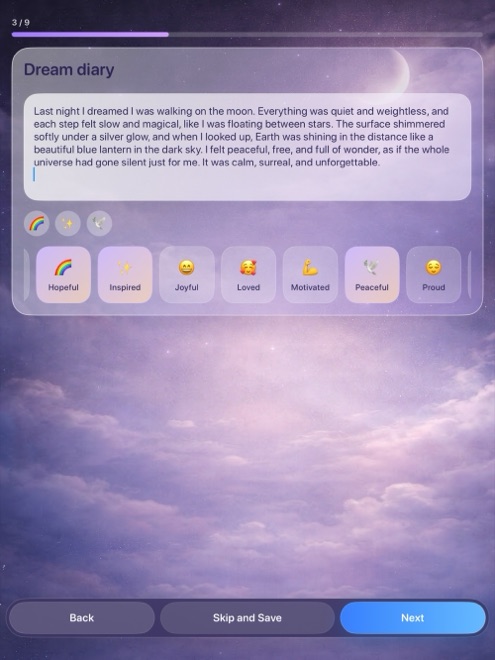
Neither a vivid dream nor a busy Tuesday fits cleanly into a single smiley-face icon. A dream can feel curious and anxious in the same scene, just as a workday can leave you proud and drained at once. Dreams Calendar replaces one-number mood sliders with thirty tappable emotion chips shared across night dreams, daydreams, and evening reflections.
Why single mood numbers lose useful meaning
When an app asks you to rate your mood from 1 to 5, almost every mixed experience collapses into a neutral 3. Two months later, a flat line of threes cannot tell you whether you felt peacefully calm all month or swung between excitement and worry on the same days.
Naming specific feelings separates low-energy calm from low-energy sadness, and high-energy excitement from high-energy tension. Picking from a consistent vocabulary also avoids inventing twenty synonyms that cannot be counted together later.
Tap multiple chips from a balanced thirty-word set
Dreams Calendar places thirty emotion chips directly beneath the text area: fifteen positive emotions, ranging from calm to confident, and fifteen negative emotions, ranging from anxious to worried. You can tap one chip, four positive and two negative chips, or skip them altogether.
Because the exact same thirty chips appear in Night Dreams, Day Dreams, and Day Reflections, you do not have to learn separate tagging systems for morning and evening entries.
- Fifteen positive chips and fifteen negative chips with zero typing required.
- Select as many simultaneous emotions as honestly fit the entry.
- Consistent tags across nights and days feed directly into Statistics.
Keep morning and evening tagging honest
Tagging works best when you pick what you actually felt inside the dream or moment rather than judging whether the feeling made logical sense. An absurd dream about missing a school bus twenty years after graduation can still carry genuine urgency or relief.
Aim for two to five chips that stood out strongest rather than tapping a dozen subtle possibilities on every entry. Selective choices make your top-emotion charts far sharper over a full season.
- Write a line or two of context first so the scene or day sits clearly in mind.
- Scan the positive emotion chips and tap any that genuinely occurred, even inside an otherwise tense night.
- Scan the negative chips and mark specific friction points like worry or anxiety.
- Open Statistics after a couple of weeks to compare your most frequent positive and negative emotions.
Understand emotion balance in the scatter chart
Two bar charts in Statistics rank your most common positive and negative emotions across whatever date window you choose. Beside them sits a scatter chart plotting sleep quality against emotion balance — calculated simply as positive emotions minus negative ones.
Instead of claiming one causes the other, the scatter chart lets you inspect your own data points directly: whether high-star nights cluster on the positive side for you, or whether emotional dreams appear regardless of how deeply you slept.
Can I select both positive and negative emotions on the same dream?
Yes. Tap as many chips from both the fifteen positive and fifteen negative sets as apply to that entry.
How is emotion balance calculated in the Statistics tab?
Emotion balance subtracts the count of negative emotion chips from the count of positive emotion chips logged for that entry or period.
Are emotion chips shared between dream entries and day reflections?
Yes. Night dreams, day dreams, and day reflections all use the same thirty emotion chips so patterns can be counted together.